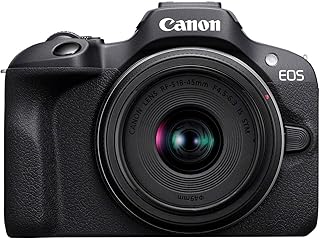
This comparison examines three popular cameras in the higher price segment: two Panasonic models and one Canon DSLR. The goal is to clarify which device suits which type of photographer, based on fundamental differences in design and intended use, rather than on technical specifications.

| Rating | 42.3 | |
| ratings | 0.0 | |
| Price position | 25.0 | |
| price now | 10.0 | |
| Points | 77.3 |

| Rating | 43.2 | |
| ratings | 0.0 | |
| Price position | 10.6 | |
| price now | 20.0 | |
| Points | 73.8 |

| Rating | 42.3 | |
| ratings | 0.0 | |
| Price position | 10.0 | |
| price now | 20.0 | |
| Points | 72.3 |
| Criterion | Sony Alpha 6400 APS-C Spiegellose | Canon EOS R8 Vollformat-Systemkame | Sony Alpha 6700 Spiegellose APS-C |
|---|---|---|---|
| price now | €828.79 | €1,332.15 | €1,353.99 |
| usual price | €796.63 | €1,332.15 | €1,353.99 |
| lowest price measured | €741.18 | €1,332.15 | €1,353.99 |
| Rating | 4.7 | 4.8 | 4.7 |
| ratings | 0 | 0 | 0 |
| Price movement | volatile | stable | stable |
| Price trend | |||
| Points | 77.3 | 73.8 | 72.3 |
Our recommendation is the Panasonic Lumix DC-FZ82DE because it offers the best balance of versatility and ease of use for a wide range of shooting situations. It is particularly suitable for travelers and hobbyists who want a single device for various subjects, from landscapes to wildlife. The Canon EOS 2000D is a better choice if you plan to invest in a lens system and prioritize image quality in low light. The compact Panasonic is ideal for those who value portability above all else, but it comes with more compromises in image quality and control.
If you buy a no-name camera from Far East platforms like Temu, you typically get a much lower price, but you also face significant risks. These devices often lack reliable quality control, have poor image sensors, and may not last long. Support and warranty are usually nonexistent, and software updates are rare. While you might save money upfront, the overall experience and durability are likely to be inferior to established brands.
Temu does not carry branded goods — the link searches for a comparable no-name item. We do not verify prices there.
A bridge camera has a fixed lens with a large zoom range, while a DSLR has interchangeable lenses and a larger sensor. This means DSLRs offer better image quality and flexibility, but they are heavier and require additional lenses.
Generally, no. Compact travel cameras have small sensors that struggle in low light, producing more noise and less detail. For better low-light performance, a camera with a larger sensor, like a DSLR or a mirrorless model, is recommended.
All three have automatic modes, but the compact travel camera is the simplest due to its point-and-shoot nature. The bridge camera also offers easy operation, while the DSLR has a steeper learning curve but provides more room to grow.
Four disclosed factors: rating level on Amazon (45 points), breadth of the rating base (10), price position among the three (25) and the current price advantage against the usual price from our own series (20). No lab figures, no manufacturer claims, no paid placement.
Affiliate links: we earn a commission on qualifying purchases. The price stays the same for you.