🔩 Cordless Drills
Cordless drills are one of the most versatile tools you can own, but the sheer number of options — from basic screwdrivers to full hammer drill sets — makes choosing the right one genuinely confusing. This guide breaks down the key differences between types, explains what specs actually matter, and helps you avoid the most common buying mistakes so you spend your money wisely.

Types of Cordless Drills: Which One Do You Actually Need?
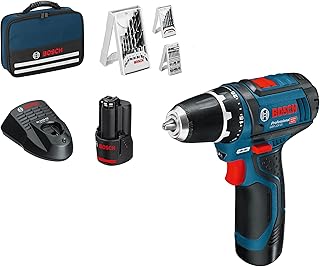
The category broadly splits into a few distinct tool types, and picking the wrong one is the single most common mistake buyers make. A standard cordless screwdriver (Akkuschrauber) is designed primarily for driving screws and light drilling into wood or drywall. These are compact, lightweight, and easy to handle for everyday household tasks — a well-rated example like the Bosch EasyDrill 18V-38 sits comfortably in this space at around €50.
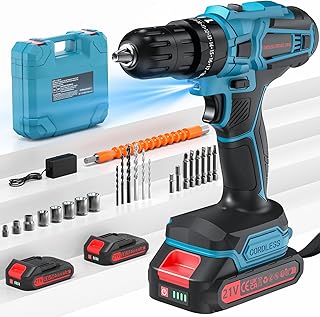
A combi drill (Bohrschrauber) adds a clutch system and higher torque, making it suitable for drilling into harder materials like softwood, plywood, and light masonry. If you plan to assemble flat-pack furniture but also occasionally hang shelves or run cable channels, a combi drill covers most bases. The DCA Akku-Bohrschrauber-Set with 40 Nm of torque is a decent orientation point for this segment.
An impact drill or hammer drill (Schlagbohrer) adds a percussive action on top of rotation, which is essential for drilling into concrete, brick, or stone. If you need to hang anything heavy on a solid masonry wall, a hammer drill is not optional — a regular combi drill will struggle and wear out quickly. Don't buy a hammer drill if you only ever work with wood and screws, though; they're heavier and louder than necessary for lighter tasks.
Key Specs Explained: What the Numbers Actually Tell You
Voltage is the most visible spec, typically ranging from 10.8V (or 12V) up to 18V or 20V for consumer tools. Higher voltage generally means more power and longer runtime, but it also means heavier batteries. An 18V or 20V drill is the sweet spot for most home users — enough power for real work without the bulk of professional 36V tools.
Torque, measured in Newton-metres (Nm), tells you how much rotational force the drill can apply. For screwdriving tasks, 20–30 Nm is plenty. For drilling into hardwood or using larger bits, look for 40 Nm or more. The number of clutch settings also matters: more settings give you finer control, which helps prevent stripping screws or overdriving fasteners into soft materials.
Battery capacity is rated in milliamp-hours (mAh). A 1500–2000 mAh battery is adequate for occasional home use; 3000 mAh or above is better if you're working continuously for longer periods. Pay attention to whether the kit includes one or two batteries — having a spare while one charges makes a real practical difference on larger jobs.
Sets, Bits, and Accessories: Getting Real Value
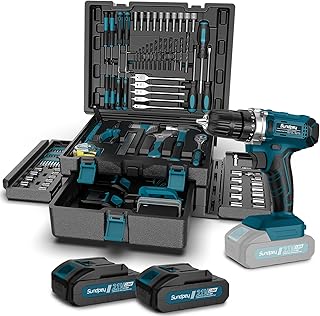
Drill and bit sets can look like exceptional value on paper — a filled toolcase like the Sundpey 170-piece Werkzeugkoffer at around €50 offers a broad selection of bits, sockets, and accessories alongside the drill. These all-in-one sets make sense if you genuinely need the variety, but quality can vary significantly across the accessories. Individual bits in bundled sets are often made from softer steel and wear faster than separately purchased, brand-name bits.
If you already own a drill, investing in a quality set of HSS metal bits or a dedicated masonry bit set is often a better use of €15–25 than buying more mixed accessories. For regular woodworking, Torx and PZ2 screwdriver bits are the ones that wear out fastest and are worth buying in multipacks.
For more demanding cutting tasks, a cordless saw (Akku-Säge) is a separate category entirely. Reciprocating saws and circular saws use the same battery platforms as drills from the same brand, so if you're already invested in one manufacturer's battery ecosystem, expanding within it is usually the most cost-efficient path.
Common Buying Mistakes to Avoid
Buying based on voltage alone is a classic error. A cheap 20V drill can underperform a well-engineered 18V model from an established brand because motor quality, gearing, and battery cell quality all matter as much as the headline voltage figure.
Ignoring battery compatibility is another expensive mistake. If you buy two drills from different brands, you end up with two separate battery ecosystems — chargers, spares, and replacements all double up. Committing to one platform (Bosch, Makita, DeWalt, or similar) from the start saves money over time, even if the first purchase costs slightly more.
Finally, many buyers underestimate how much weight matters. A drill that feels fine in a shop for 30 seconds becomes tiring quickly when you're working overhead or in tight spaces for an hour. Check the stated weight (with battery) before buying, especially if you have wrist or shoulder concerns.
Honest Price-Performance Assessment
At the entry level (€25–45), you'll find basic screwdrivers and no-name combi drills. These are genuinely fine for light, infrequent use — hanging pictures, assembling flat-pack furniture a few times a year. Build quality and battery longevity are the main trade-offs; don't expect them to last a decade of regular use.
The mid range (€50–120) is where the best value sits for most home users. Here you get more robust construction, better clutch control, meaningful torque figures, and usually a more reliable battery. Bosch, DCA, and similar brands offering kits in this range tend to represent real quality rather than just marketing.
Above €150, you're entering semi-professional territory — brushless motors, longer warranties, higher-capacity batteries, and better build quality for sustained daily use. This is worth it for tradespeople or serious DIYers who use a drill several times a week, but it's more than most occasional users need.
Care and Usage Tips to Extend Tool Life
Store lithium-ion batteries at partial charge (around 40–60%) if you won't be using the tool for several weeks. Storing them fully depleted or constantly at 100% reduces long-term cell health. Avoid leaving batteries in a hot car or in direct sunlight.
Keep drill bits sharp. Blunt bits require more force, generate more heat, and put unnecessary strain on the motor. A simple bit sharpener or replacing worn bits is far cheaper than prematurely burning out a motor. When drilling into metal or masonry, use cutting fluid or take regular breaks to let the bit cool.
Clean the chuck and ventilation slots periodically, especially after dusty work. Dust and debris can work into the motor housing over time. After any wet or outdoor work, wipe the tool down and let it dry before storing it in a closed case.
Frequently asked questions
- What voltage cordless drill do I need for home use?
- For most household tasks — screwdriving, drilling into wood, occasional light masonry — an 18V or 20V drill is the right choice. 12V models are lighter and fine for very light tasks, but they run out of power quickly on harder materials.
- Can I use any brand's bits with my cordless drill?
- Yes. Standard drill bit shanks (round or hex) are universal across brands. The chuck size (most commonly 10mm or 13mm) determines the maximum bit shank diameter you can use, so check that before buying larger bits.
- Is a hammer drill worth it if I only occasionally drill into walls?
- If your walls are masonry or concrete, yes — even occasional use justifies a hammer drill because a standard combi drill will struggle and wear out quickly on hard materials. If your walls are plasterboard or timber-framed, a regular combi drill is sufficient.
- How long should a cordless drill battery last before it needs replacing?
- With normal home use and proper storage, most lithium-ion drill batteries last 3–5 years or several hundred charge cycles. Degradation is gradual — you'll notice shorter runtime before the battery fails completely. Replacement batteries are available for most brand-name tools and are usually worth buying to extend the tool's life.
Editorial guide, last updated 2026-06-13. Product examples are for orientation; the price shown on Amazon at checkout applies.