🏋️ Fitness & Home Gym
Setting up a home gym can be as simple as a pair of dumbbells or as involved as a full cardio and strength setup — and the right choice depends entirely on your goals, space, and budget. This guide covers the five most popular home fitness categories: dumbbells (Hanteln), pull-up bars (Klimmzugstangen), resistance bands (Widerstandsbänder), cross trainers (Crosstrainer), and foam rollers (Faszienrollen). You'll learn what separates good equipment from bad, what mistakes to avoid, and how to get the most value for your money.


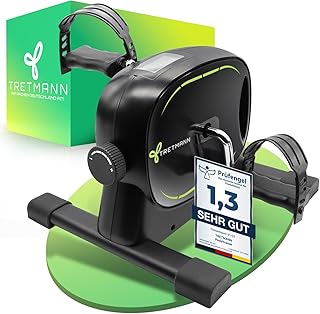

Understanding the Five Core Categories
Home gym equipment splits neatly into strength tools, cardio machines, and recovery aids — and each serves a different purpose. Dumbbells and resistance bands build muscular strength and endurance. Pull-up bars target the upper body and core. Cross trainers provide low-impact cardiovascular conditioning. Foam rollers support muscle recovery and mobility work.
The key mistake most beginners make is buying too much too soon. A resistance band set and an adjustable dumbbell pair can cover an enormous range of exercises for under $100 combined, whereas a cross trainer makes sense only if cardiovascular training is a consistent priority and you have at least 5–7 square feet of dedicated floor space.
Think about how you actually train — or plan to train — before committing to large or expensive equipment. Cardio machines collect dust at a higher rate than any other category of home fitness gear.
Dumbbells: Fixed vs. Adjustable and What to Look For
Fixed dumbbells are the most straightforward option: durable, instantly ready, and available in rubber-coated or cast-iron versions. The downside is cost and space — a full set from 5 to 30 kg occupies a rack and adds up quickly in price. Rubber-coated hex dumbbells are the most practical for home use because they protect floors and don't roll.
Adjustable dumbbell sets, such as those in the style of the ATIVAFIT Kurzhantel-Set, let you change the load in seconds using a dial or pin mechanism, replacing an entire rack with two compact units. They're ideal for smaller spaces and are cost-effective if you need a broad weight range. The trade-off is that they're more mechanically complex and can feel slightly less balanced than fixed weights at the extremes of their range.
When buying, check the weight increment steps (2.5 kg steps are more versatile than 5 kg), the maximum load, and the grip texture. Knurled or textured grips reduce slippage, especially during higher-rep sets. Avoid very cheap cast-iron sets with thin paint coatings — the paint chips quickly, and the edges can be rough.
Pull-Up Bars and Resistance Bands: Compact Strength Tools
Pull-up bars come in three main types: door-frame bars (no installation required, just tension-fit), wall-mounted bars, and free-standing rigs. Door-frame models like those from Pullup & Dip are the most popular for home use because they require no drilling and can be stored away. Check the maximum weight rating carefully — most are rated between 100 and 150 kg, but the quality of the foam padding and the steel gauge vary considerably. A bar that flexes noticeably under load is a safety concern, not just a comfort issue.
Resistance bands are arguably the best value-per-euro in home fitness. A set of four to five loop bands at different resistance levels — such as those from BODYMATE — lets you scale exercises across a huge range, from light mobility work to heavy-resistance rows and squats. Flat therapy bands and tube bands with handles each have slightly different use cases: loop bands are better for lower body and pull exercises, tube bands with handles suit pressing and rowing movements.
Check that bands are made from natural latex or a high-quality TPE blend. Cheap bands snap without warning, which is a safety hazard. Look for reinforced stitching on fabric-covered loop bands, and inspect for small tears before each session.
Cross Trainers: When Cardio Equipment Is Worth the Investment
A cross trainer (elliptical) provides a full-body, low-impact cardio workout that's easier on the joints than running. This makes it particularly suitable for people returning from injury, those with knee or hip sensitivities, or anyone who wants to combine upper and lower body cardio in one machine.
The critical specs to evaluate are the flywheel weight (heavier flywheels — ideally 10 kg or more — produce a smoother stride), the stride length (43–51 cm suits most adults), and the resistance system (magnetic resistance is quieter and more reliable than friction-based). Entry-level machines like the Sportstech Heimtrainer line offer reasonable features at accessible price points, but they typically have lighter flywheels and fewer resistance levels than mid-range models.
Be realistic about footprint: most cross trainers need at least 180 × 70 cm of floor space plus clearance around them. Also factor in assembly — most arrive in large flat-pack boxes and take 1–2 hours to build. Maintenance is minimal but not zero: check the drive belt tension and pedal bolts every few months, and keep the rails lightly lubricated.
Foam Rollers: Recovery Done Right
Foam rollers are used for self-myofascial release — applying pressure to muscles and connective tissue to reduce post-exercise soreness and improve range of motion. They're not a substitute for rest or physiotherapy, but consistent use genuinely supports recovery between training sessions.
The main variables are density and surface texture. Smooth, medium-density rollers are best for beginners and sensitive muscles. High-density or textured rollers (with ridges or knobs) provide more targeted pressure and suit people already comfortable with the technique. Blackroll is one of the most recognized brands in this segment, with a broad lineup from standard to extra-firm variants. Length matters too: a 45 cm roller is sufficient for most users, but a 90 cm model allows full thoracic spine work.
Usage tip: roll slowly — about 2–3 cm per second — and pause on tender spots for 20–30 seconds rather than rolling quickly back and forth. Clean your roller after use with a damp cloth; avoid soaking foam rollers in water as this degrades the foam over time.
Price-Performance Assessment and Buying Mistakes to Avoid
Across all five categories, the mid-price segment consistently offers the best value. Very cheap equipment often cuts corners on materials, safety ratings, or durability — a broken resistance band mid-set or a pull-up bar that fails under load are not just inconveniences. At the other extreme, premium pricing in home fitness often reflects brand positioning rather than proportional quality gains.
Common buying mistakes: purchasing a cross trainer or heavy dumbbell set without measuring your actual available space first; buying fixed dumbbells in a single weight rather than a range; selecting resistance bands by color alone without checking the actual resistance rating in kilograms; and choosing a foam roller based on price alone without considering density.
A practical starter setup for most people — adjustable dumbbells, a resistance band set, a door-frame pull-up bar, and a foam roller — can be assembled for roughly $150–$300 total and covers strength, mobility, and recovery effectively. Add a cross trainer only when you have a consistent cardio habit and the space to justify it.
Frequently asked questions
- Are adjustable dumbbells as good as fixed ones for home use?
- For most home users, yes. Adjustable sets offer a broad weight range in a compact form. The main limitations are slightly slower weight changes and higher upfront cost compared to a single pair of fixed dumbbells. For dedicated strength training with frequent load changes between sets, a fixed set is faster and more convenient.
- Will a door-frame pull-up bar damage my door frame?
- Most tension-fit bars won't damage solid wood or metal door frames if used within their rated weight limit and installed correctly. However, they can leave marks on softer or painted door frames over time. Always check your door frame type and the bar's installation instructions before use.
- How do I know which resistance band strength to buy?
- Look for sets that specify resistance in kilograms or pounds, not just color names, since color coding varies by brand. Beginners typically start with lighter bands (5–15 kg resistance) for upper body and medium bands (15–30 kg) for lower body. A set of four to five graduated levels gives you the most flexibility.
- Is a cross trainer worth buying for a small apartment?
- Only if you have a dedicated space of at least 2 square meters and will realistically use it several times per week. For occasional cardio, resistance bands, jump ropes, or bodyweight training are far more space-efficient and cost less. A cross trainer's value increases significantly with consistent use.
Editorial guide, last updated 2026-06-13. Product examples are for orientation; the price shown on Amazon at checkout applies.