🥣 Food Processors & Stand Mixers
Food processors and stand mixers sit at the heart of many kitchens, but the category spans everything from compact choppers to full-featured stand mixers with planetary drives — and picking the wrong one is an easy and costly mistake. This guide breaks down the real differences between machine types, explains which specs actually matter, and helps you match a machine to the way you actually cook.


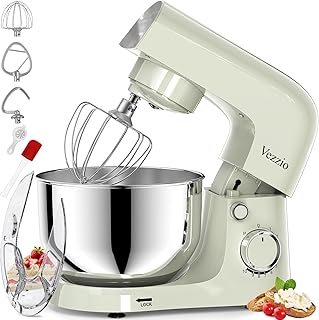

🔎 See all Food Processors & Stand Mixers bestsellers on Amazon
Understanding the Different Machine Types
The terms 'food processor,' 'stand mixer,' and 'kneading machine' are often used interchangeably in marketing, but they describe genuinely different tools. A stand mixer (Küchenmaschine) uses a rotating bowl and a planetary-action head to whip, fold, and beat ingredients — it excels at bread doughs, cake batters, meringues, and anything that benefits from slow, continuous mixing. A dedicated kneading machine (Knetmaschine) is similar but optimized specifically for heavy bread and pasta doughs, often with a more powerful motor and a stronger gear system.
A food processor (Foodprocessor) works differently: it uses high-speed spinning blades inside a fixed bowl to chop, slice, shred, purée, and sometimes knead. It is faster for prep tasks like dicing onions or making pastry dough but generally less effective at aeration tasks like whipping cream. A mini chopper (Zerkleinerer) is a smaller, simpler version of a food processor, ideal for nuts, herbs, and small quantities — not a replacement for a full machine.
Many all-in-one machines marketed as 'Küchenmaschinen' try to do both jobs, combining a mixing bowl with a food processor attachment. These are convenient for kitchens with limited space, but they rarely match the performance of a dedicated machine in either role. Understanding which tasks you perform most frequently is the single most important step before buying.
Key Buying Criteria That Actually Matter
Motor power is the most advertised spec, and it matters — but only up to a point. For occasional home baking, 600–800W is typically adequate for a stand mixer. If you regularly knead stiff bread doughs or process large volumes, 1000W or above gives meaningful headroom. The Arebos and Camic machines in the 1500W range are positioned here. That said, rated wattage reflects maximum draw, not continuous output, so look for information on motor quality and torque rather than peak wattage alone.
Bowl capacity is equally important and easier to evaluate. A 4–5 liter bowl suits most households baking for 2–4 people. If you bake large loaves or double batches regularly, look for 6–7 liters. Smaller bowls are also less effective for very small quantities — most machines struggle to properly mix a single egg white in a large bowl.
Drive system and build quality separate budget machines from mid-range ones. A planetary drive (where the attachment orbits the bowl in an elliptical path) gives far more even coverage than a simple gear-driven center attachment. Metal gears outlast plastic ones in the long run. Check whether the housing is metal or plastic — metal housings dampen vibration and tend to last longer under repeated heavy use. Speed settings (look for at least 6–8 discrete speeds plus a pulse function) give you meaningful control over texture and aeration.
Common Buying Mistakes to Avoid
The most frequent mistake is buying based on wattage alone. A high-wattage motor mounted on a flimsy plastic body with plastic gears will disappoint faster than a well-engineered 800W machine. Read user reviews specifically for long-term durability, not just first impressions — a 4.7/5 rating based mostly on early reviews may not reflect how the machine holds up after a year of regular use.
Another common error is underestimating how much counter space and weight matter in daily use. Stand mixers can weigh 6–10 kg and take up significant counter real estate. If you have to move the machine in and out of a cabinet every time, you will use it less. Be realistic about your kitchen layout before buying.
Finally, buyers frequently overlook the accessory ecosystem (Zubehör). A stand mixer with a broad range of compatible attachments — pasta rollers, meat grinders, vegetable spiralizers — offers long-term versatility. Bosch's Serie 4 platform, for example, has an established accessory range. However, accessories add cost, so only factor them in if you genuinely anticipate using them. Buying a premium machine for its accessory options and then only ever using the standard whisk is a poor investment.
Price Tiers and Honest Value Assessment
At the entry level (roughly €80–€130), you will find machines like the Arebos 1500W and the Bosch Serie 2. These are capable of everyday mixing and occasional dough work, and for light to moderate use they represent solid value. Expect more plastic components and simpler motor management. The Camic machines in this range offer competitive specs for the price, though brand longevity and spare-parts availability are harder to assess for newer or smaller brands.
The mid-range (€130–€250) is where build quality improves meaningfully. The Bosch Serie 4 with its stainless steel bowl sits here, and at this price point you gain better motor management, more robust gearing, and usually a more complete accessory set out of the box. For anyone baking bread weekly or more, spending here rather than at the entry level is generally worthwhile over a 3–5 year horizon.
Above €250, you enter the territory of machines like KitchenAid's Artisan line or Kenwood's Chef series. These offer exceptional durability, wide accessory ecosystems, and often longer warranties. They make sense for frequent or demanding use, but for someone who bakes a cake once a month, they are difficult to justify on pure cost-efficiency grounds. Honest assessment: most home cooks will be well served in the €130–€220 range if they choose carefully.
Care, Maintenance, and Getting the Most From Your Machine
Most bowls, whisks, dough hooks, and beaters are dishwasher-safe, but check the manual — some coated attachments degrade faster in a dishwasher. The motor housing should only be wiped down with a damp cloth; never immerse it. After kneading sticky doughs, let the residue dry slightly before cleaning — it comes off more easily than when wet.
Do not run the machine continuously at high speeds for extended periods. Most consumer-grade machines are designed for duty cycles of a few minutes at a time with rest periods in between. Overloading the bowl or exceeding the recommended dough quantity (usually stated in the manual as a maximum flour weight) is the leading cause of premature motor burnout.
Store attachments in a dry place and inspect them periodically for cracks, especially plastic dough hooks. For machines with metal gears, there is little maintenance required beyond keeping them clean. If you notice unusual noise or vibration, check that the bowl is properly locked and that no attachment is loose — running a machine with an improperly seated bowl can damage both bowl and drive coupling over time.
Frequently asked questions
- What is the difference between a stand mixer and a food processor?
- A stand mixer uses a rotating bowl and planetary-action attachments to mix, whip, and knead — ideal for doughs and batters. A food processor uses high-speed blades to chop, slice, shred, and purée. Some machines combine both functions, but dedicated tools generally outperform combo units in their primary role.
- How much wattage do I actually need for bread dough?
- For occasional bread baking, 800–1000W is sufficient for most home recipes. For stiff, heavy doughs or frequent use, 1200–1500W provides more headroom. More important than peak wattage is the quality of the motor and gear system, which determines how reliably that power is delivered over time.
- Are cheaper brands like Camic or Arebos worth buying?
- They can be good value for light to moderate use. The trade-off is usually in long-term durability, spare-parts availability, and accessory ecosystem compared to established brands like Bosch or Kenwood. Read reviews that specifically mention use after 6–12 months, not just initial impressions.
- Can I use a food processor to knead bread dough?
- Yes, many food processors include a dough blade and can knead bread dough, but they typically handle smaller quantities and shorter kneading times than a dedicated stand mixer. For occasional, smaller loaves it works well; for regular or large-batch baking, a proper stand mixer with a dough hook is more practical.
Editorial guide, last updated 2026-06-13. Product examples are for orientation; the price shown on Amazon at checkout applies.